


Free written scope consultation - allowances, timeline, and change-order rules on paper before a single trade is scheduled
Sakrete Home Additions & ADU: The Fort Worth Owner's Guide
If you're planning a Sakrete home addition or ADU in Fort Worth, you're looking at a real investment: $45,000 to $130,000 for a conventional addition, and $90,000 to $220,000 for a detached ADU, depending on size, finishes, and site work. Most homeowners don't discover they've got a problem until the concrete or foundation work is already done, which is why we walk every project before a single bag of Sakrete gets mixed. The symptom picture is usually this: hairline cracks in a slab pour, a stem wall that settled, or a monsoon-season moisture issue that showed up six months after the pour. We've seen all of it across Fort Worth, from Ryan Place to Wedgwood.
Here's the good news: Sakrete is a proven product line. We install with it regularly, and when the mix, the forms, and the curing schedule are right, it holds up to North Texas clay soil better than most people expect. When it fails, the failure is almost always in the prep or the cure, not the bag. That's where a trained eye matters. And that's exactly what Luca Romano brings to every walkthrough, because he's the one still doing them.
Which Sakrete Models This Applies To

Sakrete isn't one product; it's a family of concrete mixes, each formulated for a specific job. For Fort Worth additions and ADUs, the two you'll hear us talk about most are Sakrete High-Strength Concrete Mix (rated at 4,000 PSI) and Sakrete 5000 Plus (rated at 5,000 PSI, used for load-bearing footings and stem walls). The 5000 Plus is what we spec for any addition that will carry structural weight, because in Fort Worth's expansive clay, 4,000 PSI concrete with the wrong slump or a bad water ratio will crack before the framing is even up.
If you already have a Sakrete product on site and you're trying to figure out what went wrong, check the bag code. Sakrete prints the plant location and date on every bag, and bags older than 90 days or exposed to humidity in a Fort Worth garage are suspect, because cement absorbs moisture and loses strength. A compatibility gotcha most homeowners miss: you cannot patch a failed structural pour with a repair product. If a stem wall or footing cracked through, you don't fill the crack; you cut it out and re-pour. The repair product bonds, but it doesn't restore load capacity. That's not opinion; that's concrete physics.
The OEM-versus-aftermarket conversation is simpler here than for most parts we cover, because Sakrete is the aftermarket standard for bagged concrete, and there's no meaningful "Sakrete-branded" companion part that has to match a proprietary spec. What matters is the PSI rating, the aggregate size, and the mix consistency. We keep a small stock of Sakrete on the truck for day-of fixes, but for a full addition pour we order fresh from the local Fort Worth supply yards. Concrete has a shelf life, and we don't gamble with it.
Styles & brands we work with







Signs Your Sakrete Home Additions & ADU Is Failing
- Hairline cracks that widen over weeks, not years. This is the biggest tell in Fort Worth, and it usually means the slab wasn't reinforced for expansive soil. Settlement cracks will keep moving until the soil stabilizes, and by then the framing has moved too.
- Efflorescence, a white chalky film, on the slab or stem wall. That's water migrating through the concrete, carrying minerals to the surface. It means moisture is getting in somewhere, and in a Fort Worth summer that moisture turns into mold inside your walls.
- Doors or windows that suddenly bind or stick in the new space. The concrete didn't move; the framing settled onto a slab that isn't level anymore. If you can see light gaps at the bottom of a door that closed fine last winter, the pour is moving.
- A hollow, drummy sound when you tap the slab with a hammer. That's delamination, where the top layer of concrete separated from the body of the pour. It usually comes from overworking the surface with a trowel or adding water during finishing. It won't fix itself, and tile or flooring over it will pop loose.
- Water pooling against the stem wall after a Fort Worth downpour. That's a drainage problem, not a concrete problem, but it will destroy the concrete eventually. Clay soil expands when wet, pushing sideways against the footing. If the gutter downsput dumps six inches from the wall, you're building soil pressure with every storm.
See the difference
 Before
 After
After Before
 After
After Before
 After
AfterReplacement Cost & What's Included
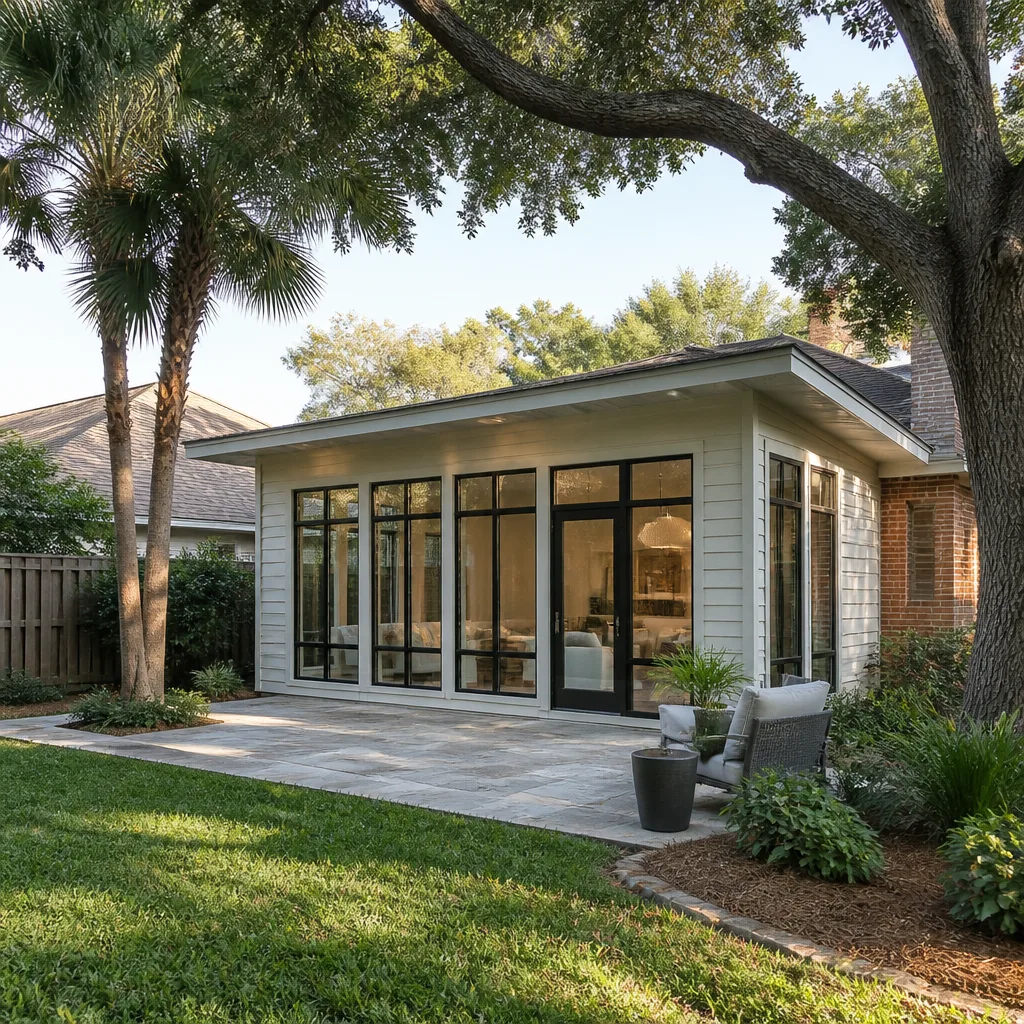
A home addition in Fort Worth runs $45,000 to $130,000, and a full ADU build is $90,000 to $220,000. When concrete has failed and you're looking at tearing out and re-pouring, you're usually adding $8,000 to $25,000 in concrete and site work to your total, depending on the size of the slab and whether the old pour requires demolition or can be topped with a bonded overlay.
What drives the range matters more than the number itself. The biggest variables are access to the site (a backyard ADU with no driveway access requires a pump truck or a wheelbarrow line), the thickness of the slab, the reinforcement schedule, and whether Fort Worth code requires piers or a post-tension slab for your soil conditions. We give you a written price before the demo starts, and that price doesn't change at the invoice. The work includes the tear-out, formwork, rebar, the Sakrete mix, the pour, the cure schedule, and a walkthrough with Luca before we call it done. If it's not right, the 365-Day Done Right Promise applies, in writing.
DIY or Call Us?
Mixing and pouring Sakrete for a small flatwork pad is a weekend job a competent homeowner can handle. Mixing and pouring a structural slab for an addition or ADU is not. Here's the honest line: if the pour is under 4 inches thick, won't carry any building load, and is smaller than about 80 square feet, you can do it with bags and a rented mixer. Anything structural, anything on expansive Fort Worth clay, or anything over 4 inches thick, you want a crew that knows curing schedules and slump tests, because you get one shot before the concrete sets.
And let's talk about the obvious risk: a half-ton of wet concrete with a bad mix ratio is a permanent problem by the time you notice it. You can't un-pour it. If you're unsure whether your site prep is right, call (682) 841-6652 and we'll tell you straight, for free. The work talks. We just back it up.
FAQs
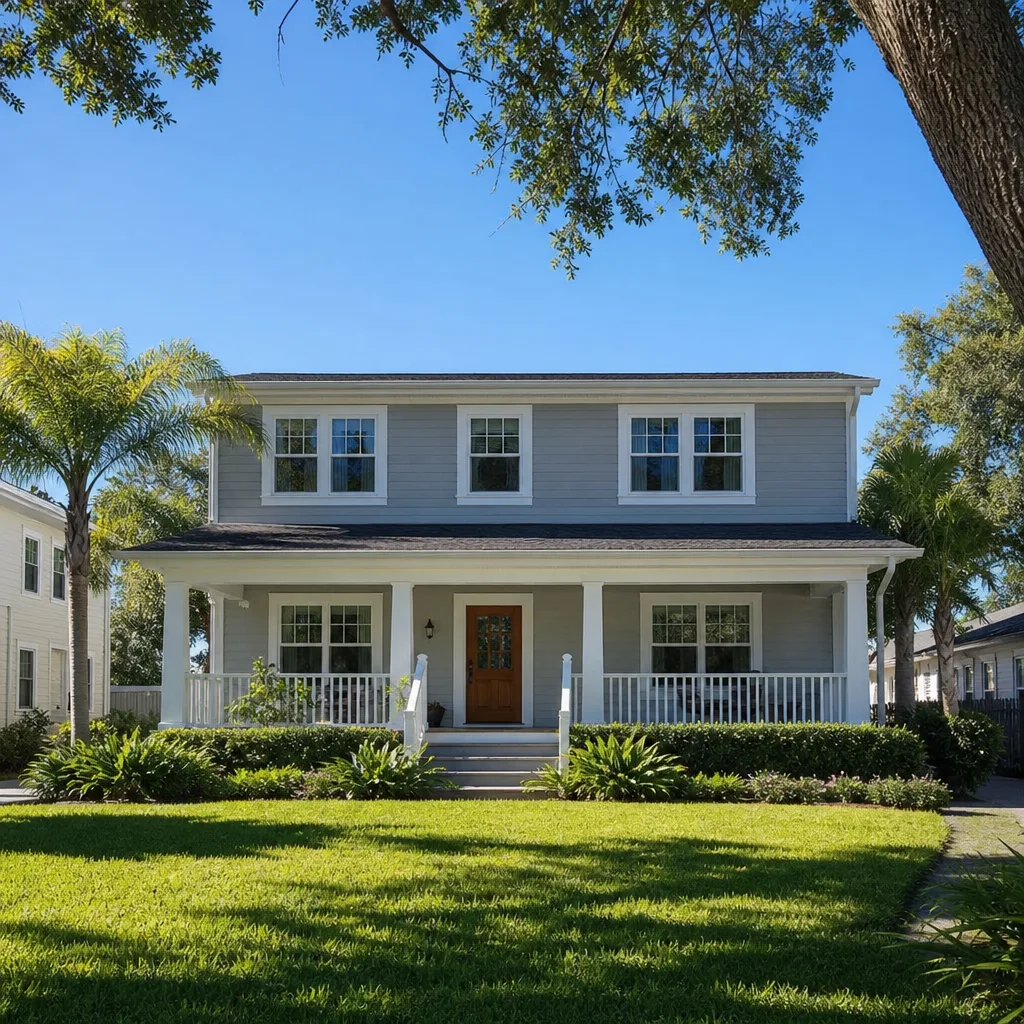
A properly poured and cured Sakrete slab on a Fort Worth residential addition should last 40 to 60 years, but the curing schedule and the drainage around it matter more than the mix itself. Keep water away from the stem wall and it'll outlast the paint on the house. Call (682) 841-6652 if you're seeing movement that shouldn't be there.
Small, stable cracks can be filled with a structural epoxy, and surface spalling can be topped with a bonded overlay, but a crack that's widening or running through a load-bearing area means the soil under the slab is moving, and no filler will stop that. We'll tell you which one you have on a free walkthrough.
For a typical Fort Worth addition slab, expect one to two days for demolition and haul-off, one day for formwork and rebar, one day for the pour, and a minimum of seven days of curing before we put any framing load on it. The full concrete phase usually runs two to three weeks.
We keep a small amount of Sakrete High-Strength and 5000 Plus on the truck for repair work and day-of needs, but for a full addition or ADU pour we order fresh by volume from local Fort Worth suppliers so the mix is exactly what the job specs call for. We also stock parts for KraftMaid, Cambria, and Silestone products on the finish side.
Written by Luca Romano, Owner & Lead Remodeler, Sawyer Remodel Fort Worth at Sawyer Remodel Fort Worth, serving Fort Worth and nearby areas.


