
Last updated October 16, 2026



Free written scope consultation - allowances, timeline, and change-order rules on paper before a single trade is scheduled
Construction Cost Breakdown: The Fort Worth Homeowner’s Reference for 2026
Fort Worth remodeling is not cheap, but it is also not mysterious. The difference between a quote of $18,000 and $31,000 for what looks like the same bathroom is rarely greed. It is usually scope, specification, and the reality of the North Texas labor market. This guide walks through what actually drives construction costs in Fort Worth in 2026, what a legitimate bid should contain, and where homeowners get surprised. By the end, you will know how to read a quote the way a builder does, not the way a brochure wants you to.
Styles & brands we work with







Quick Answer
In Fort Worth, a mid-range bathroom remodel in 2026 runs roughly $18,000 to $38,000, a kitchen remodel $35,000 to $80,000, a room addition $180 to $320 per square foot, and a full exterior refresh $25,000 to $60,000. Labor accounts for 40 to 55 percent of most bids, with materials, permits, and project management filling out the rest. These ranges assume code-compliant work with permits, and you should treat any bid far below them as a scope problem, not a bargain.
Table of Contents
- The Three Forces Driving Fort Worth Remodel Costs in 2026
- 2026 Price Ranges by Project Type
- Reading the Labor vs. Materials Split
- Hidden Costs That Do Not Show Up in a First Quote
- How the Fort Worth Subcontractor Market Affects Your Price
- What a Written Price Guarantee Actually Means
- Change Orders vs. Price Surprises: Knowing the Difference
- Common Mistakes to Avoid
- When to Call a Professional
- Frequently Asked Questions
- The Bottom Line
The Three Forces Driving Fort Worth Remodel Costs in 2026
If you are pricing a remodel in home renovation in Fort Worth, you are not just paying for tile and drywall. You are paying for three structural forces that shape every bid in this market.
First, labor tightness. North Texas has been one of the fastest-growing regions in the country for over a decade, and the construction workforce has not kept up. Framers, plumbers, and electricians can name their rate because builders from Weatherford to Arlington are competing for the same crews. In our experience, a skilled tile setter in Fort Worth commands $45 to $75 per hour in 2026 depending on the complexity of the work. A lead carpenter runs $55 to $90. These are not inflated numbers; they are what it costs to keep a qualified crew on your job instead of someone else’s.
Second, materials that never fully deflated. Lumber, copper, PVC, and engineered quartz all spiked during the pandemic supply crunch. Many dropped from their 2022 peaks, but very few returned to 2019 levels. A sheet of 3/4-inch plywood that cost $38 before 2020 sits closer to $55 today. A mid-grade quartz countertop from Cambria or Caesarstone runs $75 to $145 per square foot installed. These are baseline realities for every remodeler in the market.
Third, City of Fort Worth permit fees. The Development Services department raised permit fees in recent years to fund expanded inspection staffing and a digital plan review system. A straightforward bathroom remodel permit can run $400 to $1,200 depending on the scope of plumbing and electrical work; for more detail, see our Construction Warning Signs: A Fort Worth Homeowner’s Reference Guide. A room addition triggers plan review fees, impact fees, and utility connection charges that can total $3,000 to $8,000 before the first nail is driven. Cheaper bids often quietly omit these line items, which is how a $22,000 addition quote becomes a $29,000 project.
2026 Price Ranges by Project Type
The Fort Worth market does not have one price for a remodel. It has three tiers, and understanding what separates them is the fastest way to compare bids accurately. Below are the ranges we see most often in the area.
Bathroom remodel:
- Low tier, $10,000 to $18,000: Cosmetic updates only. Existing footprint, no plumbing relocation, stock vanity, standard porcelain tile, acrylic tub surround. This works for a guest bath or quick refresh, but do not expect custom anything.
- Mid tier, $18,000 to $38,000: Full gut to the studs in a typical 5×8 to 8×10 bathroom. New plumbing valves, cement board and waterproofing, custom or semi-custom vanity, mid-range quartz or solid surface countertop, porcelain or ceramic tile, Kohler or Moen fixtures, new exhaust fan, recessed lighting. This is the sweet spot for a primary bathroom in neighborhoods like Ridglea Hills or Wedgwood.
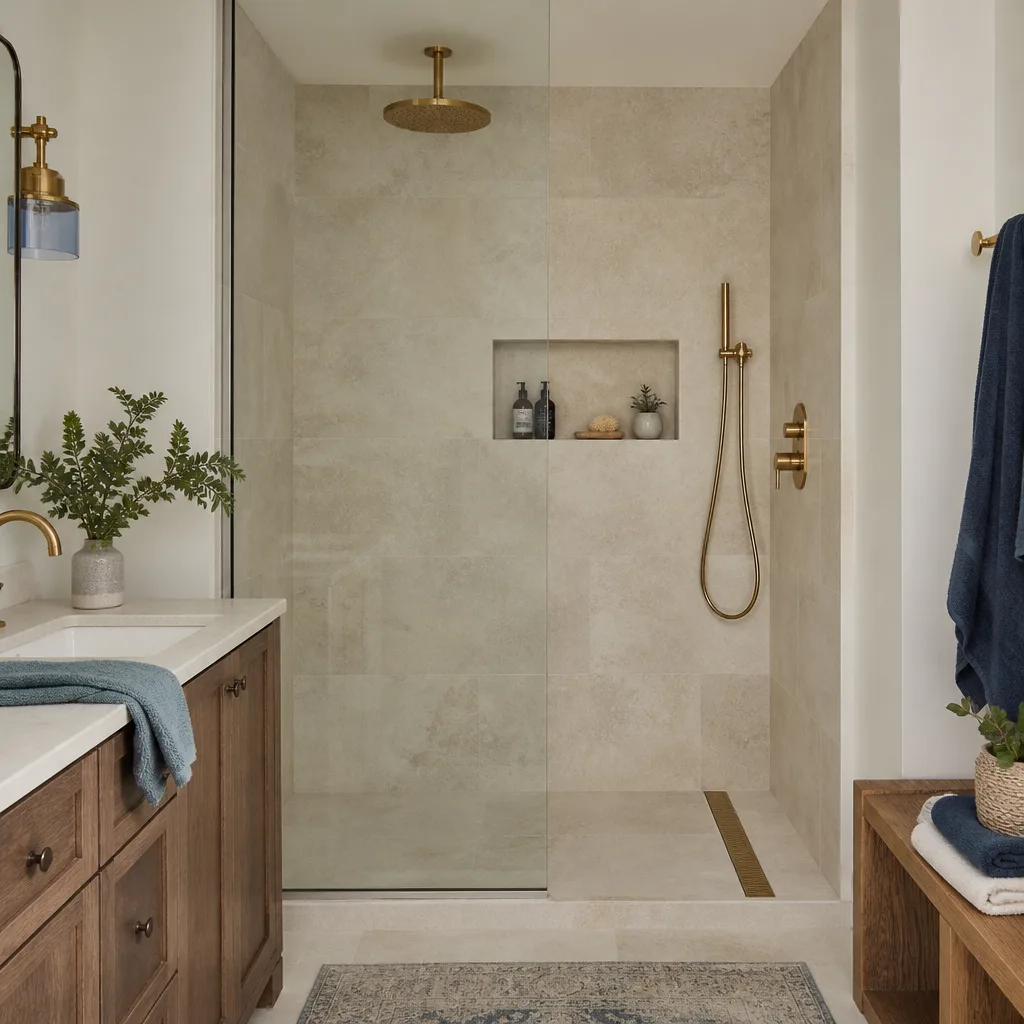
- High tier, $38,000 to $75,000+: Enlarged footprint or moving plumbing, curbless shower with linear drain, heated floors, custom cabinetry, Cambria or Caesarstone tops, high-end fixtures from Kohler or Toto, frameless glass, custom tile work. Think primary suites in Tanglewood or Montserrat.
Kitchen remodel:
- Low tier, $22,000 to $35,000: Refacing or stock cabinetry, laminate or entry-level quartz counters, basic subway tile backsplash, existing appliance layout, floating LVP or sheet vinyl flooring.
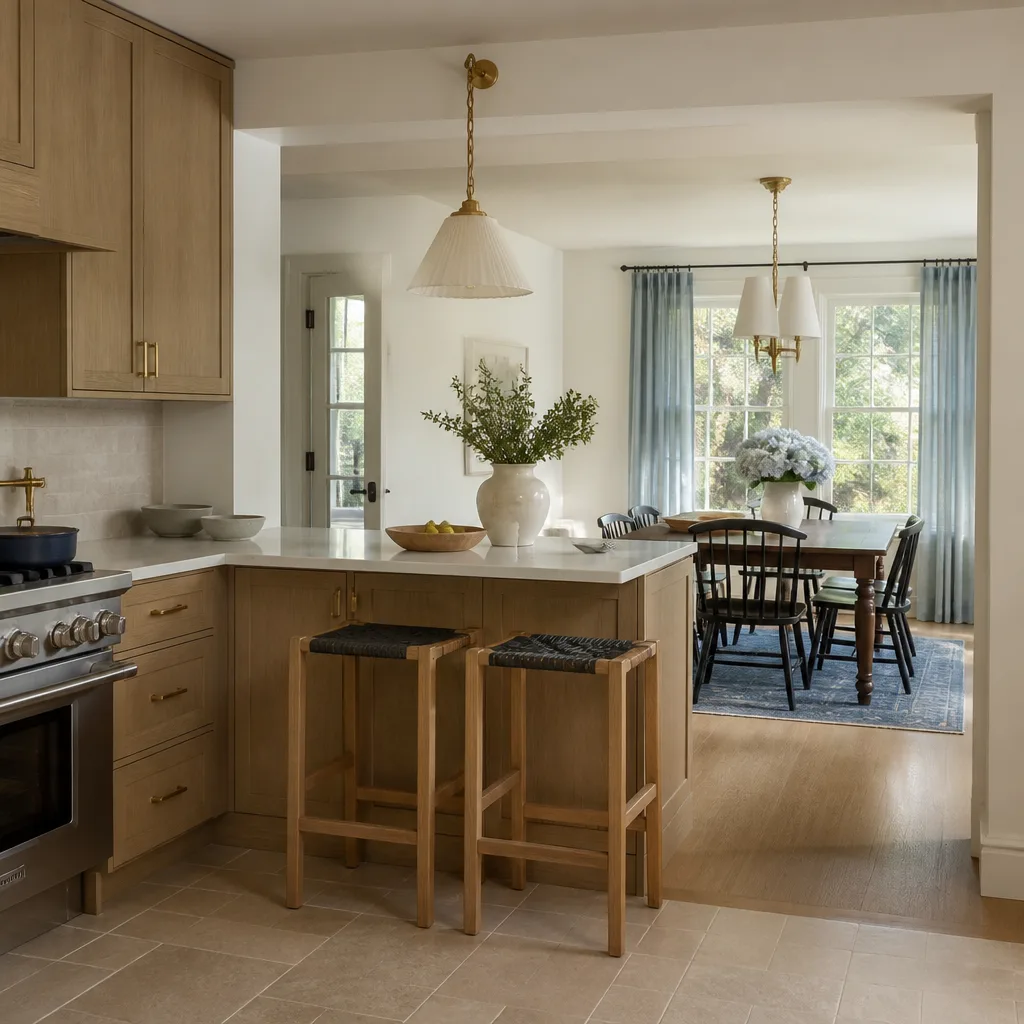
- Mid tier, $35,000 to $65,000: Semi-custom cabinetry from a line like KraftMaid, quartz or granite countertops, tile backsplash, new sink and faucet, cabinet lighting, some layout adjustment, mid-range appliance allowance. This is where most full kitchen renovations in Fort Worth land.
- High tier, $65,000 to $120,000+: Custom cabinetry, stone counters with waterfall edges, appliance upgrades that require new electrical runs, structural changes, dedicated wet bar or butler’s pantry, designer tile, and finish carpentry. Most common in Fairmount historic remodels or new high-end builds in Walsh or Mira Vista.
Room addition:
- Unfinished or basic, $95 to $160 per square foot: A shell addition with minimal plumbing or electrical, basic finishes, standard windows, shingle roof tie-in.
- Finished, $180 to $280 per square foot: Bedroom, office, or extended living space with insulation, drywall, HVAC tie-in, flooring, and standard trim. This is the common Fort Worth range.
- High-end or complex, $280 to $450+ per square foot: Primary suite additions with full bathrooms, kitchens, or structural work like removing a load-bearing wall and adding steel beams. Foundation work in Fort Worth’s expansive clay soil adds cost at every tier.
Exterior refresh:
- Low tier, $8,000 to $18,000: Paint, fascia repair, gutter replacement, new front door. Curb appeal without structural work.
- Mid tier, $18,000 to $45,000: James Hardie siding on a typical ranch or two-story, full window replacement with mid-grade vinyl or entry-level fiberglass, new gutters and downspouts, exterior lighting.
- High tier, $45,000 to $80,000+: Full siding and trim package, premium windows, roof replacement with GAF or CertainTeed architectural shingles, outdoor kitchen or covered patio additions, stone veneer.
These are planning numbers, not bids. The point is that you should be able to see which tier a quote falls into and ask why a given project is priced where it is.
What Moves You Between Tiers
Most of the cost difference between a $15,000 and a $30,000 bathroom comes down to five decisions:
- Moving plumbing. Keeping a toilet and shower where they are saves thousands. Moving a drain line across a slab foundation adds days of work and hundreds in materials.
- Waterproofing method. A fiberglass insert is cheap and fast. A tile shower with Schluter edge trim (the metal strip that waterproofs where your tile meets the floor) and a full waterproofing membrane is slower and costs more, but it lasts longer and fails far less often.
- Cabinet source. Stock from a big-box store, semi-custom from KraftMaid, or fully custom from a local shop. Each step roughly doubles the cabinet line item.
- Countertop material. Laminate at $15 to $30 per square foot installed. Quartz at $75 to $145. Natural stone like marble at $100 to $200 plus sealing.
- Fixture grade. A $90 builder-grade faucet and a $450 Kohler or Grohe fixture both move water. The difference is in the cartridge quality, finish durability, and how the thing feels in your hand ten years from now.
Reading the Labor vs. Materials Split
Every legitimate remodel quote in Fort Worth should break down into categories: labor, materials, subcontractor costs, project management, and everything else. The split varies by project type, but a healthy general range is 40 to 55 percent labor and 35 to 50 percent materials, with 10 to 15 percent going to permits, project management, and contingency.
When you see a quote where labor is 70 percent of the total, that is not automatically padding. High-skill work like tile, custom cabinetry, and stone countertops is labor-heavy by nature. A shower that takes a tile setter four days is going to show labor as the biggest number. What should make you pause is when the ratio flips hard the other way: 70 percent materials with a tiny labor line often means the contractor is marking up materials aggressively or planning to use the cheapest available labor, which you will feel in the finish quality.
A useful question to ask any bidder: “Can you show me the labor hours this assumes?” A transparent remodeler can tell you the shower will take roughly 70 hours of tile work and the drywall crew will be on site for six days. A contractor who cannot or will not answer that question is often one who has not actually planned the job.
Subcontractor line items deserve the same scrutiny. In Fort Worth, a licensed electrician charges $90 to $150 per hour, and a plumber runs $110 to $180 per hour for service and remodel work. If you see an electrical line item for a full kitchen remodel at $800, that is not a deal; that is a scope miss. A real kitchen rewire with new circuits, under-cabinet lighting, and appliance hookups runs $2,500 to $6,000 on its own.
Hidden Costs That Do Not Show Up in a First Quote
This is the section most homeowners need and most guides skip. Below are the line items that legitimately push Fort Worth projects past their initial quote, and what each one typically runs.
- Permit fees: $150 to $1,500 for a bathroom, $500 to $2,000 for a kitchen, $3,000 to $8,000 for a room addition. Any quote that says permits are “included” should still list the fee separately so you can see what was paid.
- Inspection fees: Fort Worth’s Developmental Services charges per inspection cycle, not a flat rate. A rough-in inspection, a final inspection, and a re-inspection if something fails can add $200 to $600 total.
- Debris haul-off: A full gut bathroom produces a surprising amount of waste. Dumpster rental or bag pickup runs $300 to $900 depending on volume and whether hazardous materials like old asbestos flooring are discovered.
- Material lead times: Custom cabinets run 6 to 12 weeks from order to delivery. Premium quartz from Cambria or Caesarstone can run 4 to 8 weeks. These delays do not add cost directly, but they extend your carrying costs if you are paying a second mortgage or renting elsewhere during the work.
- Surprise conditions: Rot at the bottom plate of an exterior wall, a foundation issue under the tub, galvanized plumbing that needs replacing, a panel that is out of code and will not pass inspection. In older Fort Worth homes, especially in Fairmount and Mistletoe Heights, these are common enough that we tell clients to reserve 5 to 10 percent of the total budget for the unknown.
- Utility upgrades: A 1960s home in Ridglea may have a 100-amp panel. A modern kitchen with induction cooktop, double oven, and dedicated circuits can require a 200-amp service upgrade at $2,500 to $5,000. This is not optional if you want to pass inspection.
The best estimate in the world cannot see through drywall. What separates a professional from a bid-collector is how the conversation about unknowns happens before work starts. A general contractor in Fort Worth who walks the site, asks about the age of the home, and discusses what might be behind the walls is doing a different job than one who writes a number sight unseen.
How the Fort Worth Subcontractor Market Affects Your Price
Fort Worth is not Dallas, and the labor market over here operates differently than the broader DFW metro. Tarrant County has its own inspection requirements, its own permit fee schedule, and its own pool of licensed tradespeople. This matters to your bottom line in three specific ways.
Plumbing rates run higher in Fort Worth proper. The city requires a licensed master plumber to pull permits for any plumbing relocation or new fixture installation. That licensing bar limits supply, and limited supply pushes rates up. A mid-range bathroom with plumbing relocation carries a plumbing line item of $3,000 to $7,000 in Fort Worth, which is consistently above what you might pay in an unincorporated area with looser requirements.
Electrical work is driven by panel and code reality. Fort Worth enforces current National Electrical Code standards aggressively. GFCI and AFCI protection requirements, dedicated circuits for appliances, and proper grounding all get inspected. In older neighborhoods like Arlington Heights, we regularly see panels that have been extended past their intended life and need full replacement before any permitted remodel can go forward.
HVAC is its own conversation. If your remodel changes the conditioned square footage, the mechanical system must be evaluated. A room addition means a load calculation and likely a ducted mini-split or extended trunk line. That is a $4,000 to $12,000 line item that a contractor without HVAC experience will not catch, leaving you with a hot room in August and a bill for retrofit work later.
The broader point: Fort Worth’s subcontractor market is competitive, but it is not cheap. Tradespeople here can choose between new construction, commercial work, and residential remodeling. Remodel work is the hardest of the three because it involves existing conditions, tight spaces, and homeowner expectations. That difficulty is reflected in the rate you pay, and it is part of why a Sawyer Remodel Fort Worth home project costs what it does.
What a Written Price Guarantee Actually Means
Every contractor says they stand behind their work. Very few attach a number and a year to that claim in writing. Here is what we do, and what you should ask any remodeler who wants your business.
A written price means the number you approve before demolition starts is the number you pay when the punch list closes, with one exception: a legitimate change order. Not a vague estimate. Not a range. Not a “we’ll see how it goes” verbal arrangement. A fixed line-item price for the scope described in the contract.
At Sawyer Remodel Fort Worth, we operate under The Relay Standard: a written price before any work starts, live arrival time tracking so you know when the crew is pulling up, and photo updates before and after each phase of work. It is not a marketing promise; it is the operating system for the job. You know who is coming, when they will be there, and what it costs. That is the whole contract in three clauses.
The 365-Day Done Right Promise extends the commitment past closing day. If something we installed fails within a year because of our workmanship or material defect, we make it right. Not after an argument. Not after a warranty-claim process with a third party. We come back and fix it, and the only thing you spend is the phone call.
We also run a free second visit policy on any repair that fails. If a fixture we installed develops a leak six months later, the service call to diagnose and fix our own work is on us.
This is the standard you should hold any remodeler to. Not “licensed and insured” in a tagline, but a written scope, a written price, and a written promise about what happens if the work does not hold up. Ask for all three. If a contractor balks at any one of them, that is information.
Our Material Partners
We lock in partner pricing and manufacturer support across the full project scope. Countertops from Cambria, Silestone, and Caesarstone. Fixtures from Kohler, Moen, and Grohe. Cabinetry from KraftMaid and Wellborn. Exterior lines from GAF, CertainTeed, Owens Corning, and James Hardie. These are not mystery brands that arrive on a truck from a discount supplier. They are named manufacturers with warranty support behind the install, and our relationship with them means the product claim is easy to verify.
Change Orders vs. Price Surprises: Knowing the Difference
A change order is a written amendment to the contract that you approve before additional work begins. A price surprise is a number you discover on the final invoice that you never agreed to. The difference is consent, and it is the single most important thing to understand about remodeling contracts.
Legitimate change orders happen for three reasons:
- You change your mind. You decide mid-remodel that you want a niche in the shower, a different tile, or a second sink. That changes the scope, and the new scope has a price you approve in writing before the change is made.
- Existing conditions force a change. The plumber opens the wall and finds cast-iron drain lines that are cracked and need replacement. Or the electrician discovers aluminum wiring. This work was not in the original scope because no one could see it until the wall came down. A professional documents the condition with photos, shows you what was found, and prices the fix before moving forward.
- Code requirements expand the scope. Framing reveals a structural issue that the inspector will flag. Or the new layout triggers a requirement for a second egress point. Again, the discovery is documented, the price is presented, and you approve before work resumes.
What should never happen is a final bill that is 20, 30, or 50 percent above the contract with no explanation except “unexpected costs.” That is a contractor pricing by feel instead of by scope, and it is the number one reason homeowners end up feeling taken advantage of. The fix is simple: ask before signing whether every change will be priced in writing and require your approval before work starts. The answer will tell you a lot.
Common Mistakes to Avoid
- Picking the lowest bid without comparing scope. A Fort Worth bathroom quoted at $12,000 against three bids at $25,000 is not a value; it is a different project. Ask for line items and see what is missing before congratulating yourself on saving money.
- Skipping permits to save a few hundred dollars. Unpermitted work catches up with you at resale and with your insurer. In Fort Worth, permits are tracked by address, and a buyer’s inspection can flag work that was never approved. The savings are not worth the liability.
- Not accounting for the foundation. Fort Worth sits on expansive clay soil. Foundation movement is common, and any remodel that intersects with the slab needs to account for it. Ignoring it leads to cracked tile and misaligned doors within a couple of seasons.
- Buying fixtures before the plan is done. That discounted faucet you bought at a big-box store may not fit the vanity your designer specifies, and plumbing rough-in locations change. Coordinate purchases with your remodeler or let them source through their suppliers.
- Assuming “premium” means expensive. Cambria quartz is a premium product, but it is often competitive with natural stone once you factor in sealing and maintenance. Do not assume; get the line-item price.
- Not asking about the warranty in writing. A one-year promise that exists only in a sales conversation is worth nothing. Get the guarantee in the contract with the specific terms spelled out.
- Leaving no contingency for the unknown. In older Fort Worth homes, we recommend holding back 5 to 10 percent of the budget for what the walls reveal. If you spend every dollar on finishes, you have nothing left when the galvanized plumbing shows up.
When to Call a Professional
If your project involves plumbing relocation, electrical work, structural changes, or any exterior work that touches the building envelope, hire a professional. These are not learning projects, and mistakes in them compound expensively. A leaky shower pan rots the subfloor and joists silently for months. An undersized electrical circuit is a fire hazard. A poorly flashed window sends water into the wall cavity. None of these problems announce themselves at the time the mistake is made.
Even for cosmetic work, a professional brings the material knowledge that prevents $60-per-square-foot decisions from becoming $15-per-square-foot installs. If you are in the Fort Worth area and want a written price and a defined scope before committing, Sawyer Remodel Fort Worth offers free estimates. Call (682) 841-6652 to schedule one.
Frequently Asked Questions
A mid-range bathroom remodel in Fort Worth runs $18,000 to $38,000 for a full gut and rebuild in the existing footprint. A cosmetic refresh without plumbing changes starts around $10,000, while a high-end primary bath with custom tile and premium fixtures runs $38,000 to $75,000 or more. Get a line-item quote that shows labor, materials, and permits separately so you can compare scope across bids. Call (682) 841-6652 for a free estimate on your specific project.
Not at Sawyer Remodel Fort Worth. Our written price is the price you approve before demolition, and that invoice is the one you pay at the end unless you approve a change order in writing. Change orders happen for scope additions or conditions discovered behind walls, never as a quiet line-item surprise. If a contractor cannot commit to that in the contract, keep looking.
Yes, any project that involves plumbing, electrical, or structural changes requires a permit from the City of Fort Worth. Bathroom and kitchen remodels typically require building, plumbing, and electrical permits. A room addition requires plan review, impact fees, and utility approval in addition to the building permit. Unpermitted work can create problems at resale and with insurance claims.
Cabinetry is typically the largest single line item, running $12,000 to $35,000 for semi-custom lines like KraftMaid in a standard Fort Worth kitchen. Appliances, countertops, and labor follow close behind. The cheapest part is usually paint and lighting, which is ironic because those are the upgrades most visible at a glance.
A full bathroom gut and rebuild without plumbing relocation typically takes 3 to 5 weeks, including inspections. A kitchen remodel runs 6 to 10 weeks, and a room addition can take 3 to 6 months depending on scope, weather, and the foundation work required. Custom cabinetry and premium countertops from manufacturers like Cambria add lead time before work even starts, so plan for 1 to 3 months of ordering before demo day.
It covers workmanship and material defects for one full year after your project closes. If something we installed fails because of how it was installed or because the product was defective, we make it right at no charge. It is in writing as part of every Sawyer Remodel Fort Worth contract, not an optional add-on.
The Bottom Line
Fort Worth remodeling costs in 2026 are what they are: driven by labor supply, material pricing, and a permit process that rewards doing things properly. The homeowner who benefits most from this guide is the one who stops comparing bottom-line numbers and starts comparing scopes, line items, and written guarantees. Get three bids, demand transparency on labor hours and material allowances, and ask what happens to the price if the walls reveal something unexpected. For more guides & resources, explore our blog. If the answer is a shrug, that is your answer. If the answer is a written process, you have found your remodeler.
Written by Luca Romano, Owner at Sawyer Remodel Fort Worth, serving Fort Worth since 2005.
See the difference
 Before
 After
After Before
 After
After Before
 After
After

