
Free written scope consultation - allowances, timeline, and change-order rules on paper before a single trade is scheduled
Quikrete Home Additions & ADU: The Fort Worth Owner’s Guide
Quikrete home additions and ADU construction in Fort Worth typically run $45,000 to $130,000 installed, depending on square footage, foundation work, and finish level. We match the right Quikrete products to your slab, stem wall, or footer plan and install them to spec, usually within a 6 to 10 week build window once permits clear. Most owners discover they have a problem when a crack walks across a new slab, a stem wall spalls near grade, or water pools against the foundation after a heavy Texas rain. The Quikrete bag mix matters: using a 3500 PSI mix where a 4000 PSI mix was specified is a slow-motion failure that shows up as surface dusting, edge crumbling, or a slab that won’t hold anchor bolts.
We’re an independent Fort Worth contractor. We are not affiliated with Quikrete. But we install their products constantly, and we know which mixes, reinforcements, and curing methods hold up in North Texas clay soil. Luca Romano started Sawer Remodel Fort Worth around one rule: do the job the way you’d want it done in your own house. That means no shortcut mixes, no skipped rebar, and no curing corners cut because the crew wanted to beat traffic on I-35W.
Key Takeaways
- Quikrete addition and ADU work in Fort Worth runs $45,000 to $130,000 installed.
- We stock Quikrete 5000, Quikrete Crack-Resistant Concrete Mix, Quikrete Concrete Bonding Adhesive, and Quikrete Acrylic Fortifier on the truck.
- Every poured wall, stem wall, or slab gets a written price before we mix a single bag.
- The 365-Day Done Right Promise covers the finished work for a full year. If it’s not done right, we make it right.
Which Quikrete Models This Applies To
Quikrete doesn’t make “models” the way a faucet brand does. What you have is a mixture specification, and that’s where the compatibility gotcha lives. For home additions and ADUs in Fort Worth, the relevant Quikrete products are Quikrete 5000 (a 5000 PSI high-early-strength concrete mix for slabs and footers), Quikrete Crack-Resistant Concrete Mix (blended with reinforcing fibers to resist shrinkage cracks), Quikrete Concrete Mix (the standard 4000 PSI bagged mix), Quikrete Concrete Bonding Adhesive (for tying new concrete to old when you’re extending an existing slab), and Quikrete Acrylic Fortifier (an admixture that improves adhesion and flexural strength on thin overlays).
Here’s the compatibility gotcha most owners and plenty of weekend contractors miss: Quikrete 5000 and Quikrete Crack-Resistant are not interchangeable for structural work. If your engineer called for 4000 PSI minimum compressive strength, either works. But if the plan sheet says “5000 PSI at 28 days,” standard Quikrete Concrete Mix will not meet spec. We’ve torn out slabs in Fort Worth where someone poured 4000 PSI mix into a footer that needed 5000, and the fix cost more than the original pour. Don’t guess. Read the bag, match the PSI to the plan, and if you don’t have a plan, get one.
We stock genuine Quikrete bagged mixes on the truck for most addition and ADU pours. For high-volume concrete (anything over about two yards), we bring in ready-mix concrete from a local Fort Worth batch plant instead, because bagged mix past that point costs more and cures less consistently. The OEM-vs-aftermarket question doesn’t really apply here. Quikrete is the aftermarket. What matters is whether the mix meets the spec on your approved plans.
Styles & brands we work with







Signs Your Quikrete Home Additions & ADU Is Failing
Home additions and ADUs don’t fail quietly. Here’s what we see across Fort Worth, from Fairmount to Wedgwood to Alliance, when the concrete or the framing tied to it starts going wrong.
- Cracks that open wider than 1/8 inch and keep moving. Concrete shrinks as it cures, so hairline cracks are normal. Cracks that grow, offset vertically, or let water through mean the slab is settling or the reinforcement wasn’t placed right. In Fort Worth’s clay soil, this usually points to missing steel or an undersized footer.
- Surface dusting or a soft, chalky slab surface. This is what happens when a mix was over-watered at the pour or cured too fast in Texas heat. The top layer loses strength, sheds dust forever, and won’t take a floor coating or tile without failing.
- Stem wall spalling near grade. Spalling (the concrete face flaking or popping off) means water is wicking up through the foundation and carrying salts into the concrete. You see it most on the sunny west and south walls of Fort Worth additions where the soil dries hard between rains.
- Doors or windows sticking more than 1/8 inch out of square. If your ADU’s door suddenly won’t latch, the slab has moved. Fort Worth’s expansive black clay heaves when wet and shrinks when dry, and a poorly reinforced slab responds by twisting. The frame didn’t go bad. The foundation under it moved.
- Water pooling against the stem wall after rain. Concrete is porous. If grade drains toward the addition instead of away, water sits against the wall, soaks through, and slowly destroys the rebar inside. We see this on Fort Worth additions where the builder finished the pour but never fixed the final grade around it.
None of these fix themselves. All of them get cheaper to repair the day you first notice them.
Replacement Cost & What’s Included
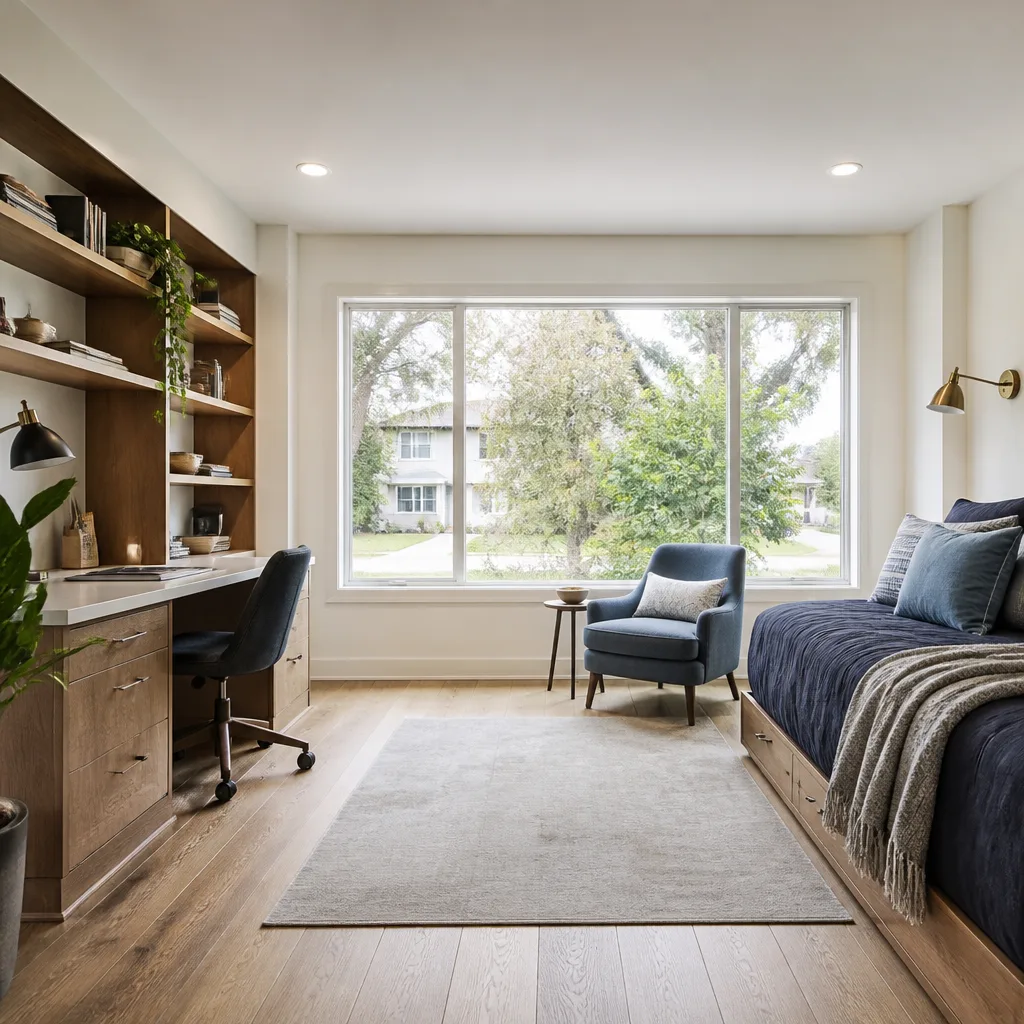
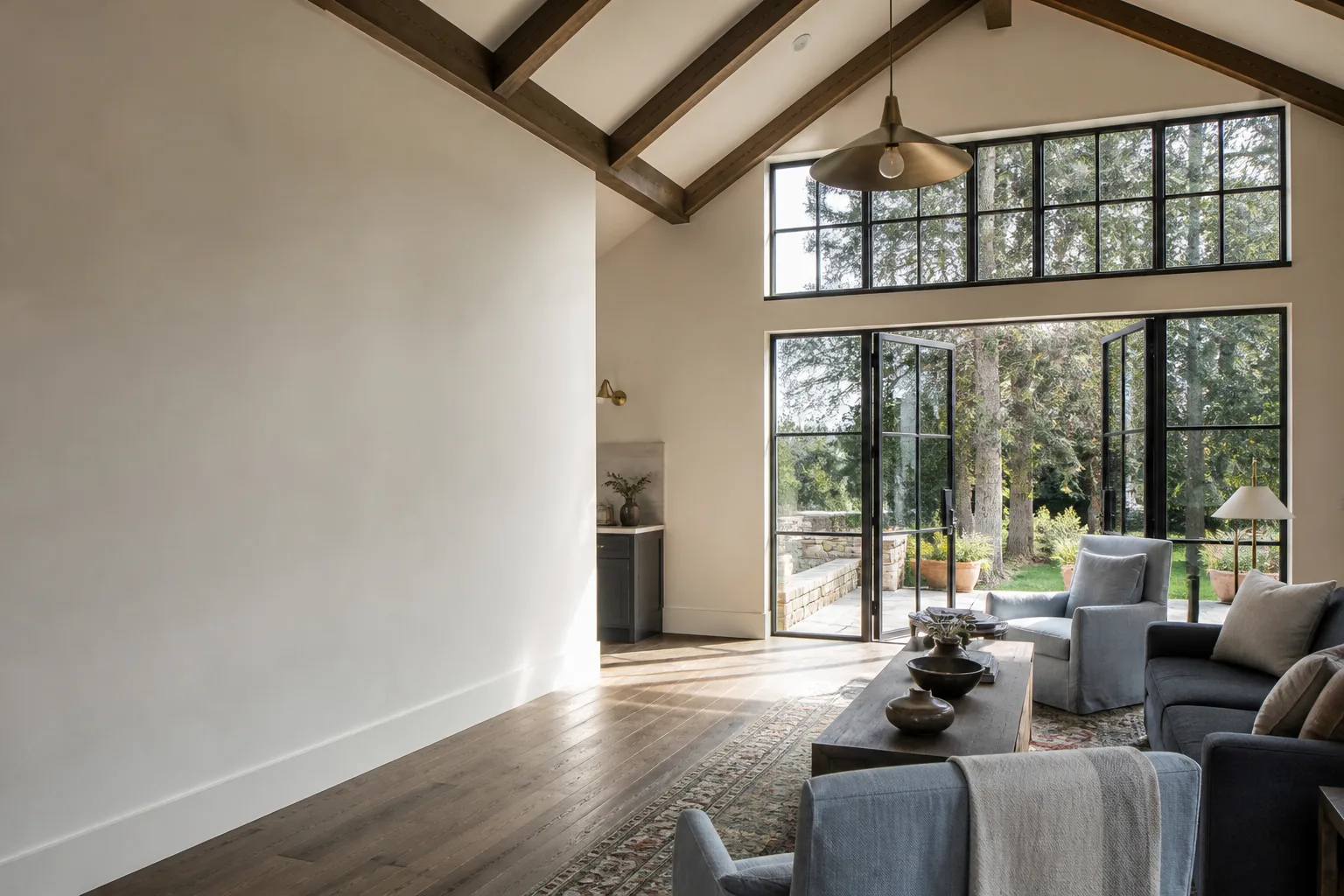
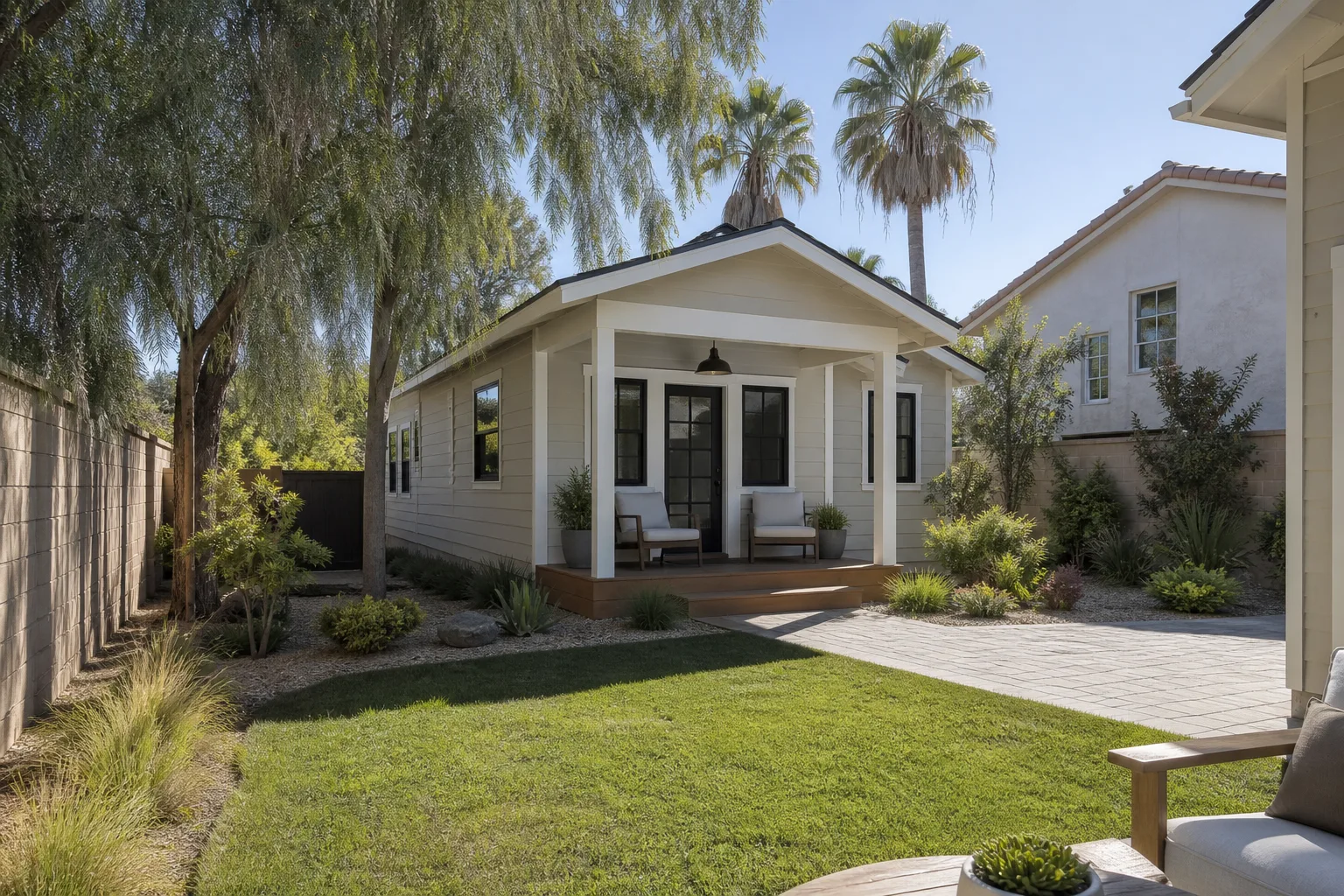
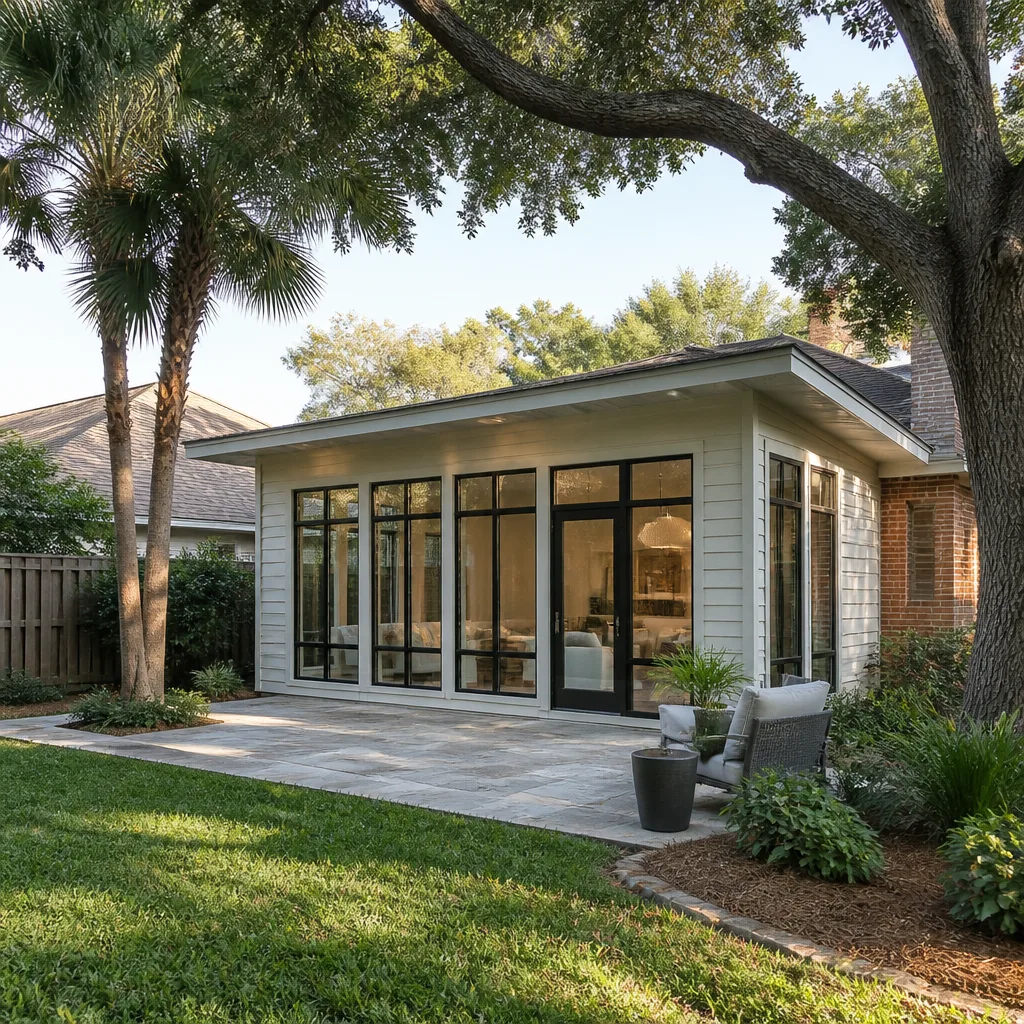
In Fort Worth, count on $45,000 to $130,000 for a full Quikrete home addition or ADU built to code, finished, and signed off. That range covers everything from a modest 400-square-foot ADU with a simple slab, standard framing, and builder-grade finishes on the low end up to a 1,000-square-foot addition with a kitchen, bath, upgraded fixtures, and higher-end finishes on the top end. The price in your case depends on square footage, whether we’re tying into an existing slab or pouring new footers, how much plumbing and electrical the space needs, and what finish level you choose.
Here’s how the money breaks down on a typical Fort Worth ADU:
- Foundation and concrete work: $8,000 to $25,000 depending on slab size, soil prep, and reinforcement.
- Framing and exterior envelope: $15,000 to $45,000 including lumber, sheathing, siding, windows, and roofing.
- Rough plumbing and electrical: $8,000 to $20,000 depending on fixture counts and panel capacity.
- Interior finishes: $10,000 to $30,000 for drywall, paint, flooring, trim, and doors.
- Kitchen or bath (if included): $9,000 to $35,000 using the same price ranges we apply to our standalone kitchen and bath remodels in Fort Worth.
We never start with an estimate that hides the real number. The written price lands in your hands before a tool is picked up, and the number on the invoice is the number you approved. The 365-Day Done Right Promise covers the finished work for a full year, in writing. If something fails because we didn’t do it right, we come back and make it right. No argument.
See the difference
 Before
 After
After Before
 After
After Before
 After
AfterDIY or Call Us?
If you’re asking this question, the honest answer is call us. Pouring a slab for an addition or ADU in Fort Worth is not a weekend project, and the failure mode isn’t cosmetic. A mis-mixed slab that cracks in the first year doesn’t just look bad. It threatens the structural integrity of the walls, roof, and everything you paid to build on top of it. We’ve seen DIY additions in Fort Worth where the owner saved $5,000 doing their own pour and then spent $30,000 having it torn out and redone. That’s not savings. That’s tuition.
What you can safely do yourself: check your plans to see what PSI rating is specified, verify your grade drains away from the existing house, and mark exactly where the new slab will sit. Those checks are free and they help you speak the same language when you talk to a contractor. What you should not do yourself: mix and pour structural concrete, set rebar, tie new slab to old slab with dowels, or build forms for anything taller than a garden border. Concrete work is load-bearing, and in Fort Worth’s expanding clay, the margin for error is thin. The work talks. We just back it up. Call (682) 841-6652 and we’ll walk the site with you, go over the numbers, and give you a written price before you commit to anything.
FAQs
A properly poured and cured Quikrete slab in Fort Worth should last 50 to 100 years or more, assuming the soil beneath it was prepared correctly and water is kept draining away from the stem walls. The concrete itself is not the weak point. The sub-base and drainage are. Call (682) 841-6652 if you suspect your existing slab wasn’t prepped right, and we’ll take a look.
Yes, if the damage is caught early enough. Hairline cracks can be routed and sealed with a polymer injection, and spalling stem walls can be parged with a Quikrete polymer-modified repair mortar. Structural cracks that move or offset vertically usually call for mudjacking, piering, or a full section replacement. The earlier we see the crack, the cheaper the fix. Call (682) 841-6652 for a free estimate and we’ll tell you which category yours falls into.
The concrete portion of an ADU in Fort Worth typically takes 3 to 7 days from excavation to a cured slab, plus another week before you can start framing on top of it. The full ADU build runs 6 to 10 weeks from permit approval to final inspection. Weather in Texas can shorten or stretch the curing window, and we don’t pour when the temperature is below 40°F or above 95°F without adding a curing compound or blankets to control the set.
Yes. We keep Quikrete 5000, Quikrete Crack-Resistant Concrete Mix, Quikrete Concrete Bonding Adhesive, and Quikrete Acrylic Fortifier on the truck for repair and small pour work in Fort Worth. For full additions and ADUs, we order bulk ready-mix from a local batch plant matched to the spec on your plans, and we bring the Quikrete bagged products for footings, stem walls, and tie-in work where bagged mix makes more sense. Call (682) 841-6652 and we’ll tell you exactly what your job needs.
Call Sawyer Remodel Fort Worth for Your Quikrete Addition or ADU
We’re a Fort Worth general contractor that’s been doing additions and ADUs the right way since 2005. Every project gets a written price before work starts, a live arrival time so you’re not sitting around waiting, photo updates before and after so you see the work even if you’re at your desk, and a crew of background-checked, uniformed technicians you’ll recognize when they show up. We work with name-brand materials across the whole build: cabinetry from KraftMaid and Cambria, fixtures from Kohler, countertop surfaces from Silestone and Caesarstone, and siding from James Hardie where the design calls for it. But the foundation under all of it? That’s Quikrete, poured to spec, cured properly, and standing straight for decades. Call (682) 841-6652 today to schedule your free estimate. Luca will walk the job himself.
Written by Luca Romano, Owner & Lead Remodeler, Sawyer Remodel Fort Worth at Sawyer Remodel Fort Worth, serving Fort Worth and nearby areas.


